Most SEO Data Is a Photograph. This Is a Record.
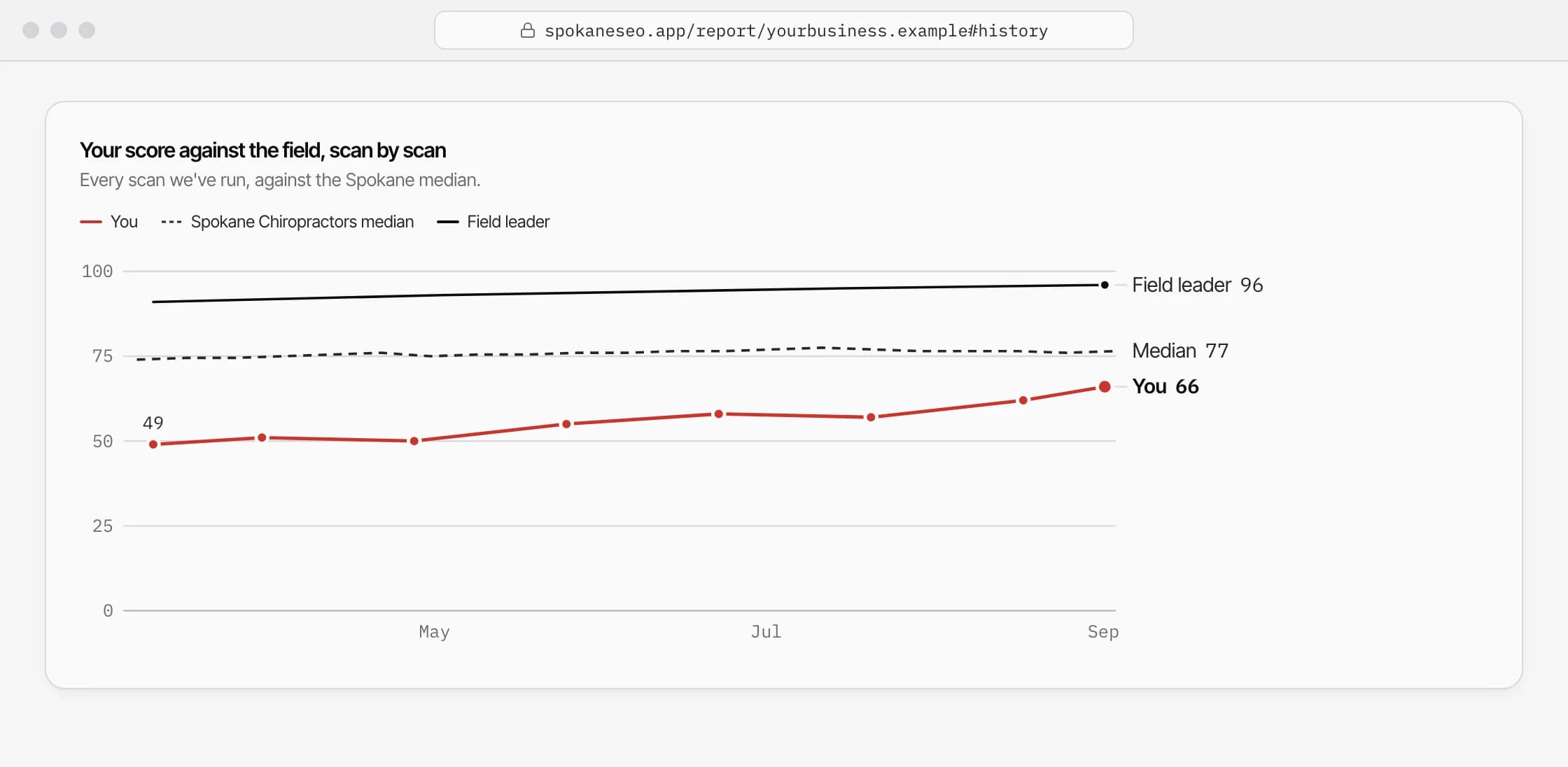
Run a national tool and you get the current state. A snapshot of where things sit today. Useful, but thin — it can't tell you what's new, what's slipping, or what's been coasting on borrowed authority for three years.
We've been doing local SEO in Spokane long enough to watch Google rename the same product three times. Local. Places. My Business. Now Business Profile. The listings moved, the ranking signals shifted, and the businesses that didn't keep up quietly fell out of the pack. That history is the asset. It's why we can read a Spokane SERP and tell you what the snapshot can't.
How the Dataset Is Assembled
Every domain that runs through the tool gets pulled apart the way Google reads it first: title, schema, headings, mobile rendering, structured data, Google Business Profile completeness. That's the on-page and local layer.
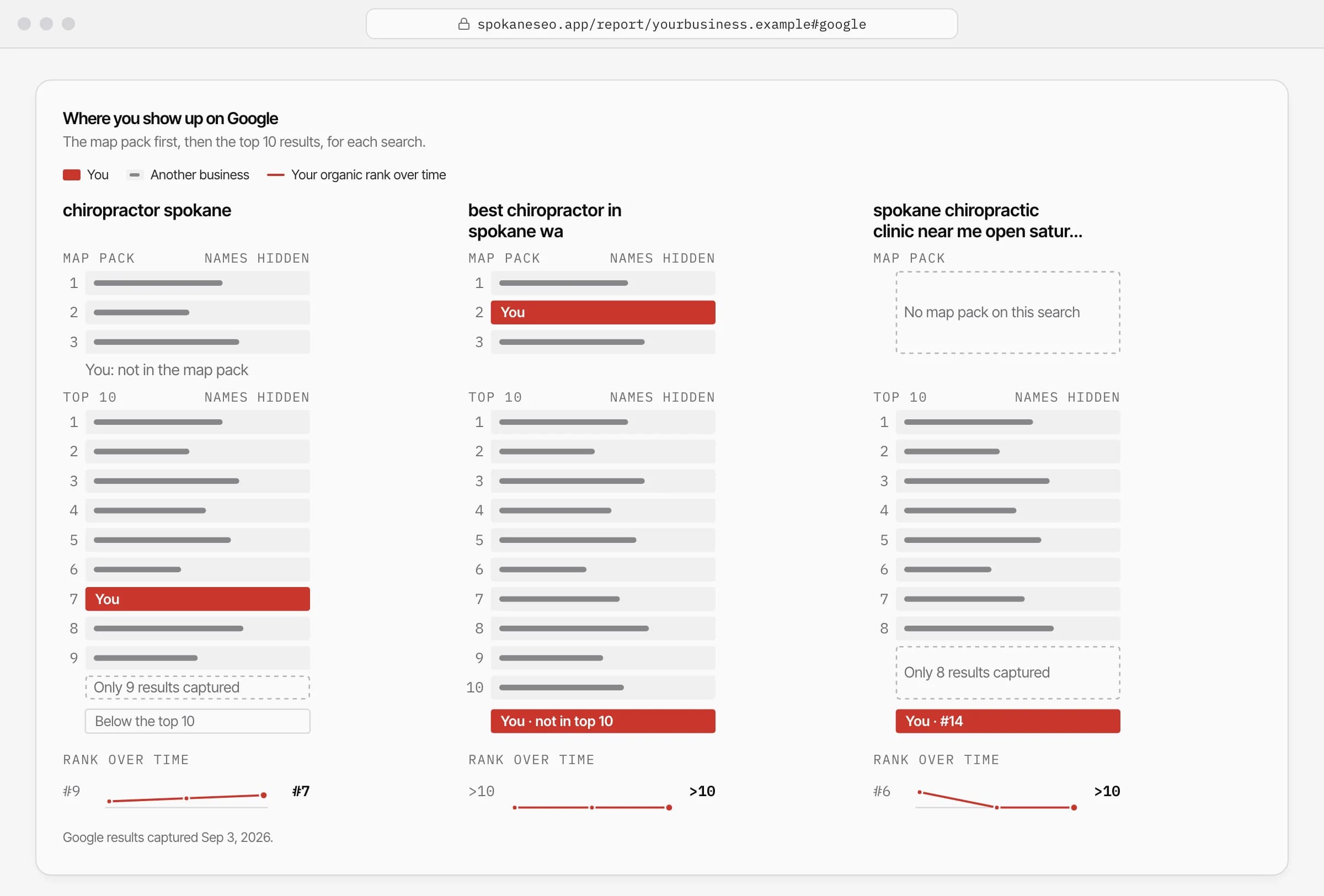
The ranking layer comes from a cached SERP graph. We run the commercial queries that matter for each Spokane vertical on a fixed cadence and store the full result set — who ranks, where, and which slots the national directories eat. When you check your domain, you're reading that graph, not firing a fresh paid query. That's why the competitor comparison costs you nothing.
Benchmarks From Observation, Not Extrapolation
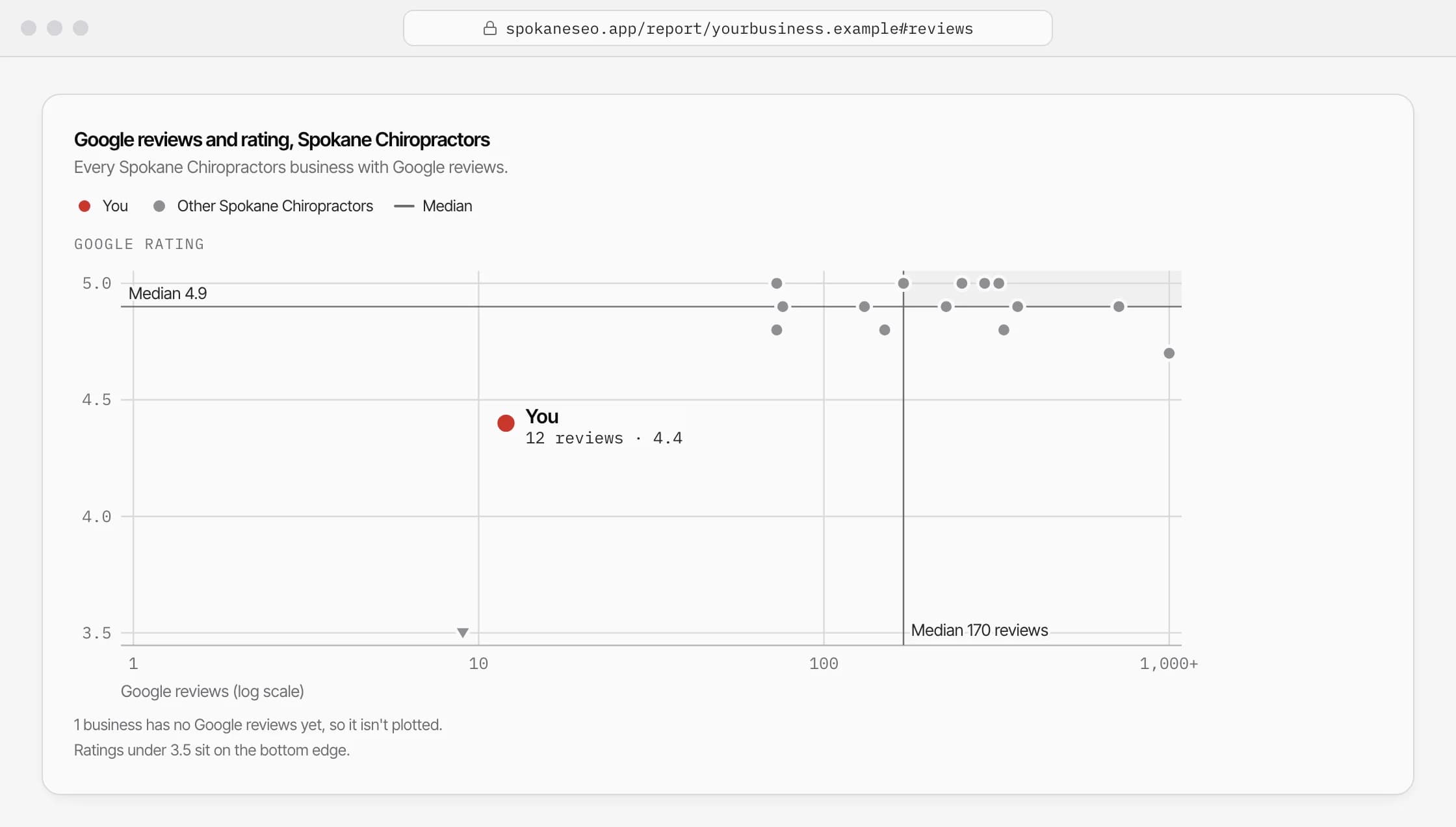
A national tool tells you the average GBP review count across a country. That number is useless in Spokane. The bar to crack a dental 3-pack here is not the bar in Dallas, and a model that averages the two helps no one.
Our benchmarks come from watching this market. What a healthy 3-pack position actually looks like after a vertical's real winners settle in. What the floor is on reviews to compete. What a site with no backlinks can still pull off when the category is soft. Observed, here, not extrapolated from somewhere else.
We Know Which Sites Are Coasting
Some businesses sit in the local pack on momentum. They haven't shipped a real change in years, and they still rank, because nobody in the vertical pushed. You can't see that in a snapshot. You see it by watching the same pack over time.
We've watched Spokane businesses lose a 3-pack spot, too. It almost always starts the same way — a stale profile, a competitor who finally claimed theirs, a few months of silence. The pre-decline pattern is consistent enough that the soft spots in a vertical are obvious once you know what to look for.
Why This Reads More Accurately Than a National Tool
Fair question, and the honest answer is scope. SEMrush and Ahrefs are built to cover everything. That's their strength and their limit — depth in any single market gets averaged away.
This dataset does one thing. Spokane, watched closely, with a memory of how the market got here. For a Spokane business deciding where to put effort, the local read beats the global one. That's the whole bet.
See Where You Actually Stand in It
The diagnosis is free and reads off this dataset: your real rank, the sites above you, what they do that you don't. Run it, then decide.
The top 5 scores on the Spokane Electrical leaderboard: 95, 88, 88, 88, 85 out of 100. Median 68.